
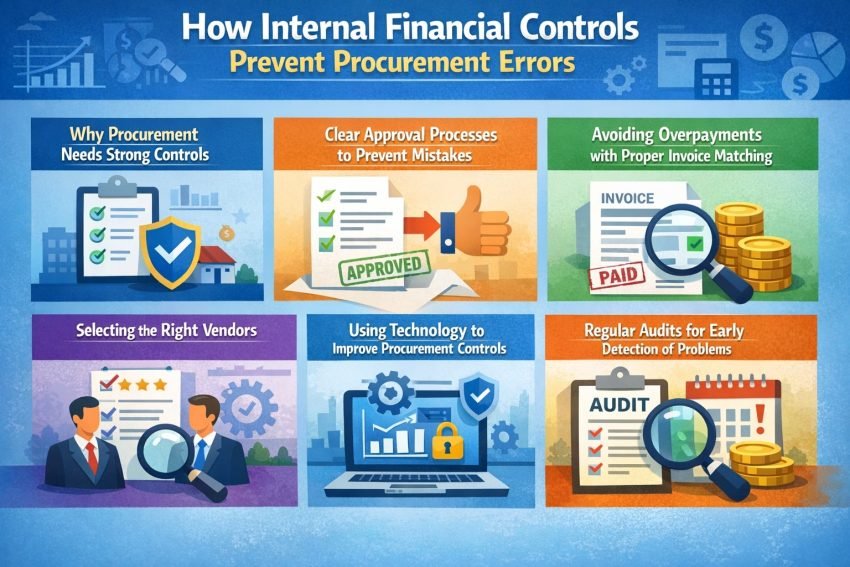
10 Reasons Why B2B IT Hardware Sourcing Hubs Prevent Procurement Failures
In high-volume corporate technology procurement, relying on fragmented suppliers and unverified gray-market stock often leads to budget overruns, operational delays, and integration failures. Establishing direct distribution pipelines through centralized B2B IT Hardware Sourcing Hubs gives enterprise procurement leads direct channel access, guaranteed product authenticity, and structured lifecycle support across every phase of technology acquisition.
From outfitting regional office nodes in major technology corridors like Chennai’s Old Mahabalipuram Road (OMR) or Bengaluru’s Electronics City to managing bulk component integration for global capability centers, strategic buyers rely on B2B IT Hardware Sourcing Hubs to streamline operations and safeguard their return on investment (ROI). Below are 10 operational reasons why your organization must anchor its procurement framework around centralized hardware hubs.
1. Direct Channel Security Through B2B IT Hardware Sourcing Hubs
Sourcing microprocessors, motherboard chipsets, and enterprise storage arrays through unauthorized distributors exposes your supply chain to counterfeit components and unverified refurbished stock. Centralized B2B IT Hardware Sourcing Hubs operate strictly through certified original equipment manufacturer (OEM) distribution channels, guaranteeing that every silicon component arrives with verifiable serial tracking and full manufacturer warranty protections.
2. Pre-Procurement Build Matrix Validation
One of the costliest errors in system assembly is purchasing components that fail physical, electrical, or firmware compatibility checks. Engineering teams operating within B2B IT Hardware Sourcing Hubs perform detailed build-matrix verification before executing high-volume purchase orders.
- Silicon Socket and Chipset Alignment: Verifying microprocessor sockets match motherboard revisions and BIOS firmware specs out-of-the-box.
- Memory Architecture Verification: Ensuring target systems match specific DDR generations, bus speeds, and Error-Correcting Code (ECC) requirements for continuous uptime.
- Thermal clearance: Matching high-TDP processors with properly dimensioned computer cabinets and cooling layouts to eliminate thermal throttling.
3. Real Landed Total Cost of Ownership (TCO) Optimization
Evaluating hardware vendors solely on initial unit price leads to hidden financial losses. Enterprise buyers use B2B IT Hardware Sourcing Hubs to calculate total landed cost, accounting for freight tariffs, carrying costs, and expected field failure rates before committing capital.
4. Logistics Efficiency in Major Technology Corridors
Locating supply channels near major tech hubs—such as Chennai’s Taramani and Perungudi corridors or Hyderabad’s HITEC City—ensures rapid freight turnarounds and predictable delivery schedules.
- Staggered Shipment Schedules: Avoid warehouse over-congestion by utilizing hub facilities to store safety stock and schedule staggered deliveries based on real-time deployment needs.
- Reduced Transit Damage: Direct hub-to-site freight routes reduce multi-node transit handling, lowering dead-on-arrival rates for fragile components like high-resolution monitors and server enclosures.
5. Standardized Workspace Peripherals and Display Ecosystems
Inconsistent workspace peripherals increase internal IT support overhead. Purchasing unified batches of input devices and connectivity accessories through B2B IT Hardware Sourcing Hubs creates standard operating environments across all corporate departments.
6. Guaranteed Consumable Pipelines for Imaging Systems
Procuring commercial printers without securing long-term supply lines for consumables creates operational bottlenecks. Sourcing printers, toners, and ink cartridges via B2B IT Hardware Sourcing Hubs locks in cost-per-page (CPP) rates and ensures ongoing supply availability for the full 3-to-5-year hardware lifespan.
7. Power Infrastructure and Grid Stability Alignment
Undersized power delivery infrastructure damages sensitive enterprise silicon. Hub procurement frameworks balance high-performance motherboards with appropriately rated active PFC power supplies and Uninterruptible Power Supplies (UPS) to guard against voltage spikes and brownouts.
8. Rigid Warranty Governance and SLA Enforcement
Formalizing procurement agreements through B2B IT Hardware Sourcing Hubs enforces strict Service Level Agreements (SLAs) for return merchandise authorizations (RMA).
- 48-Hour Advanced Replacement: Suppliers dispatch replacement stock immediately upon notification of DOA units, eliminating integration line downtime.
- Acceptable Quality Limit (AQL) Penalties: Automatic invoice credits kick in if batch defect rates exceed contractual thresholds (e.g., 1.0% to 1.5%).
9. Next-Generation AI-Native Hardware Preparedness
Modern enterprise procurement must account for evolving hardware standards. According to current tech infrastructure analyses, enterprise hardware deployments increasingly prioritize dedicated Neural Processing Units (NPUs) capable of running local AI agent workloads securely. B2B IT Hardware Sourcing Hubs provide early access to modern AI-native PCs and high-performance edge compute platforms, allowing procurement teams to future-proof corporate assets without over-relying on expensive cloud compute.
10. Multi-Channel Supplier Risk Mitigation
Relying on a single hardware vendor leaves your business vulnerable to unexpected stockouts or logistics delays. Integrating your purchasing workflow across verified B2B IT Hardware Sourcing Hubs allows enterprise buyers to execute a 70/30 primary/secondary dual-sourcing model, maintaining active supply lines across multiple authorized channels.
Industry Market Intelligence & External Procurement Resources
To explore broader supply chain frameworks, enterprise hardware management standards, and global commercial trade terms, refer to these industry resources:
- Global IT Infrastructure Insights: Review enterprise technology research and procurement frameworks via the Gartner Information Technology Hub.
- Electronics Manufacturing Standards: Learn about global quality control standards and component assembly guidelines from the IPC Electronics Supply Chain Association.
- Global Shipping & Trade Governance: Understand international commercial freight definitions and Incoterms standards at the International Chamber of Commerce.
- Quality Management Frameworks: Examine enterprise quality control frameworks and supplier audit guidelines via the International Organization for Standardization (ISO 9001).
7-Step Implementation Framework for B2B IT Hardware Sourcing Hubs
- Asset Audit: Evaluate current deployment capacity to prevent over-purchasing hardware.
- Build Clearance: Validate socket, chipset, thermal, and RAM compatibility across all bill of materials (BOM) items.
- Hub RFQ Issuance: Compare landed TCO across direct distribution partners within the hub.
- SLA Integration: Embed rigid RMA replacement turnaround times and clear Incoterms shipping responsibilities into purchase orders.
- Quality Verification: Conduct incoming batch testing against standard AQL inspection tables upon delivery.
- Asset Serialization: Log hardware serial numbers into your enterprise IT Asset Management (ITAM) platform.
- Lifecycle Refresh: Monitor component failure trends to refine vendor selection during subsequent procurement cycles.
Executive Summary
Anchoring your tech purchasing around B2B IT Hardware Sourcing Hubs delivers measurable operational control. By combining direct OEM supply channels, pre-procurement compatibility checks, rigid SLA enforcement, and long-term consumable availability, enterprise buyers lower landed costs and protect their modern IT infrastructure investment.